Most people think attraction is about looks, money, or status. But in reality, it’s about mindset, especially what psychologists call an abundance mentality. In this article, discover why women are naturally attracted to men with an abundance mindset. Learn the psychology behind confidence, emotional balance, and self-worth.
To a woman, an abundance mindset shows emotional stability. It signals that you know your value and have emotional standards for yourself. And that’s deeply attractive.
When you move through life with abundance, you give off a calm, confident energy that says: “I don’t chase what isn’t meant for me. I attract what matches me.“
What Is an Abundance Mentality?
An abundance mentality means you believe there’s always more, more opportunities, more love, more chances to grow. You’re not desperate for validation or connection because your sense of worth comes from within.
Psychologists describe this as “internal validation”. This is the idea that your confidence is self-generated, not dependent on anyone else’s attention.
That mindset is powerful because it shifts you from fear-based behavior to genuine confidence. And when women sense that, it feels magnetic.
Why Women Find It Attractive
Women are naturally drawn to men who:
Have emotional balance. You don’t overreact or chase approval.
Know their standards. You respect yourself enough to walk away when something doesn’t align.
Focus on purpose. You’re building your life, not begging for attention.
When a man lives this way, he becomes the “Porsche,” not the “Honda.” He becomes rare and valuable. He is in motion toward something greater.
Abundance vs. Scarcity Mindset
A scarcity mindset is built on fear — fear of rejection, fear of missing out, fear of not being enough. That energy pushes people away because it signals insecurity.
An abundance mindset, on the other hand, says:
“If this connection doesn’t work, it’s okay. There’s always more good out there.”
That emotional steadiness is what women interpret as confidence and leadership.
How to Build an Abundance Mindset
Stop chasing. Focus on becoming the kind of person you’d want to be with.
Develop emotional control. Respond, don’t react.
Gratitude every day. It trains your brain to notice abundance instead of lack.
Set standards. Boundaries signal self-respect, and that’s attractive.
Invest in growth. Confidence grows with progress, not perfection.
You’ll learn the psychology of attraction through mindset and how to rewire your confidence from scarcity to abundance.
Final Thought
Women aren’t just attracted to confidence. They’re drawn to certainty. When you live with an abundance mentality, you don’t just attract love, you attract opportunities, respect, and peace of mind.
Most people think mindset lives inside their head.
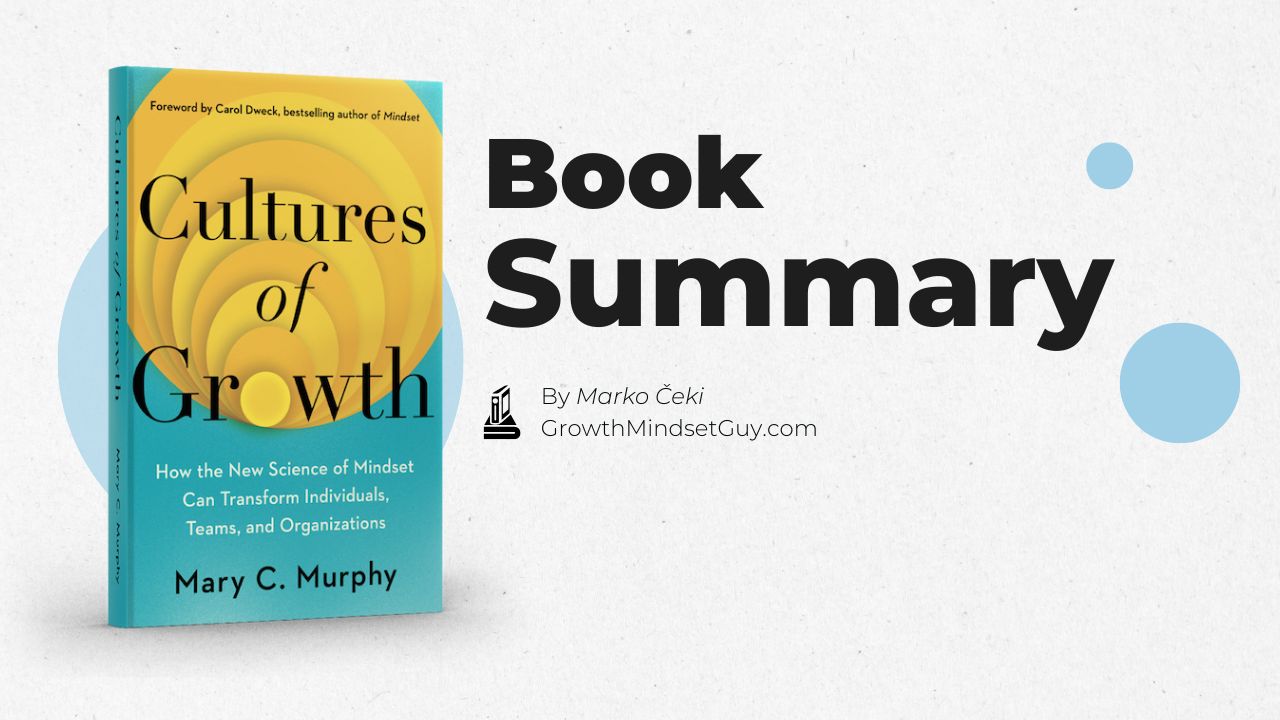
Dr. Mary C. Murphy’s book Cultures of Growth explains that mindset actually lives in the culture around you. It shows how systems, conversations, and daily habits shape the way people learn, work, and grow together.
Murphy, a social psychologist at Stanford and Indiana University and a former student of Carol Dweck, the author of Mindset, spent more than a decade studying how environments can unlock or block human potential.
Her main idea is simple:
The culture you are in often beats the mindset you have.
This article gives a clear summary of Cultures of Growth. You’ll learn its key ideas, see real-world examples, and get five practical takeaways to help you build a growth-focused culture at work or in your own life.
What Is a “Culture of Growth”?
Murphy found that teams, schools, and organizations fall into two broad mindset cultures:
Cultures of Genius — where talent is treated as innate. People compete to look smart, hide mistakes, and fear failure.
Cultures of Growth — where ability is seen as something that can be developed through effort, persistence, good strategies, help-seeking, and support.
In growth cultures, people are encouraged to reflect on what they learned — not just whether they hit their goals. The result is more innovation, trust, and collaboration across every level.
From Individual Mindset to Organizational Culture
Carol Dweck’s original Mindset taught that people with a growth mindset believe intelligence and skill can be developed.
Murphy takes that concept beyond individuals and applies it to systems: hiring, feedback, promotion, collaboration, and leadership.
When a company rewards “stars” and effortless performance, even the most growth-minded employee can shrink into self-protection mode.
That’s why Murphy says we don’t just have a mindset — we live inside one.
The Mindset Continuum (The Dimmer-Switch Model)
Forget the “fixed vs growth” binary. Mindset operates more like a dimmer switch than an on/off switch.
In supportive, feedback-rich settings, your growth mindset shines.
In perfectionist or high-stakes environments, the dimmer slides toward fixed.
The lesson: instead of judging people’s mindset, ask what cues in the culture are dimming or brightening it.
Real Examples of Growth Cultures
Murphy’s research is filled with real-world case studies showing how organizations transformed their culture — and their results:
Microsoft (Satya Nadella): shifted from “know-it-all” to “learn-it-all,” embedding curiosity and collaboration at scale.
Patagonia: built an authentic, purpose-driven culture where long-term learning outranks short-term wins.
McBride Sisters Wine Company: diversified an entire industry by focusing on growth and inclusion.
A New York school district: closed achievement gaps by teaching staff to see every student as capable of development.
Barre3: rebuilt its company culture after realizing it had accidentally created perfectionism disguised as excellence.
Across industries, the pattern is identical: when leaders prioritize learning and psychological safety, people take smarter risks and teams perform better.
🎥 Watch: Cultures of Growth Explained
👉 (VIDEO COMING SOON!)
In this video summary, I walk through the book’s key frameworks — the “dimmer switch,” five cultural arenas, and the four mindset triggers — plus five quick actions to start building a culture of growth today.
The Five Arenas Where Culture Shows Up
Murphy identified five areas where mindset culture becomes visible:
Arena
Culture of Genius
Culture of Growth
Collaboration
Compete, protect turf
Coach peers, share learnings
Creativity
Avoid failure
Prototype early and often
Risk & Resilience
Hide mistakes
Run blameless post-mortems
Integrity
Image over honesty
Reward transparency
Inclusion
Hire for pedigree
Hire for potential and perspective
When one area improves, the others follow. Growth cultures work like an ecosystem.
The Four Mindset Triggers
Murphy uncovered four predictable situations that push people toward a fixed mindset — and how to flip them back:
Evaluation: Fixed: “Don’t mess this up.” Growth: “This is feedback on strategy, not identity.”
High Effort: Fixed: “If I were talented, this would be easy.” Growth: “Effort builds ability.”
Critical Feedback: Fixed: defend and explain. Growth: decode and apply.
Others’ Success: Fixed: “They’re ahead of me.” Growth: “Their win is data about what’s possible.”
Spot your trigger → reframe → take one small action back toward growth.
How to Build a Culture That Compounds
A culture of growth isn’t a feel-good slogan — it’s a design challenge.
Here’s what it looks like in practice:
Hire for trajectory, not trophies. Swap pedigree screens for work samples and coachability.
Make learning visible. Add 5-minute “Tried → Learned → Next” loops to weekly meetings.
Normalize drafts and post-mortems. Early versions are expected. Mistakes get studied, not buried.
Reward collaboration structurally. Open demos, shared docs, rotating presenters, and “Ask for Help” rounds.
Link DEI to performance, not PR. Different perspectives make teams smarter — not just “diverse.”
When these systems align, innovation compounds. People stretch instead of protect, and trust becomes the baseline.
Top 5 Takeaways from Cultures of Growth
Mindset is a continuum, not a label. You shift based on cues around you.
Culture of Genius looks glamorous but kills innovation. It rewards status over substance.
Growth cultures are demanding, not soft. They expect continuous learning — with support.
Your systems are your culture. What you measure and reward becomes your mindset.
Use the dimmer-switch habit daily. When you feel fixed, pause and ask: Which cue hit me? What’s one nudge back toward growth?
Final Thought
If you want a team — or a life — that compounds, don’t chase genius. Design growth.
In a world that still glorifies effortless talent, Cultures of Growth reminds us that the real magic happens when effort, feedback, and support become the norm — not the exception.
Related Links
🎥 Watch: Cultures of Growth Summary on YouTube (VIDEO COMING SOON!)
The five characteristics of a growth mindset are embracing challenges, persisting through setbacks, believing effort builds ability, seeking feedback, and learning from others’ success. These traits are based on the belief that skills and intelligence can be developed through practice, not fixed talent. Here are the five core characteristics of a growth mindset:
Embraces challenges: See difficult tasks as training for growth and improvement rather than proof of limitations. Try this: when something feels too hard, add the word “yet” to your self-talk and take the next 10-minute step.
Persist through setbacks: View mistakes as information that help you adjust and improve. Try this: after any stumble, jot a quick “What happened → What I’ll try next” note.
Believe effort builds ability: Understand that focused practice, feedback, and rest develop skill. Try this: track quality reps each week instead of total hours.
Seek and use feedback: Invite critique and turn it into one small, concrete change. Try this: ask, “What is one tweak that would improve this by 10%?” then implement within 24 hours.
Learn from others’ success and failure: Feel inspired by people who are ahead and study what they do (and don’t do). Try this: pick one person you admire, list three repeatable behaviors, adopt one for the next seven days.
Mindset works like a dimmer switch, not an on-off button. Choose one habit above and run it for a week to build momentum.
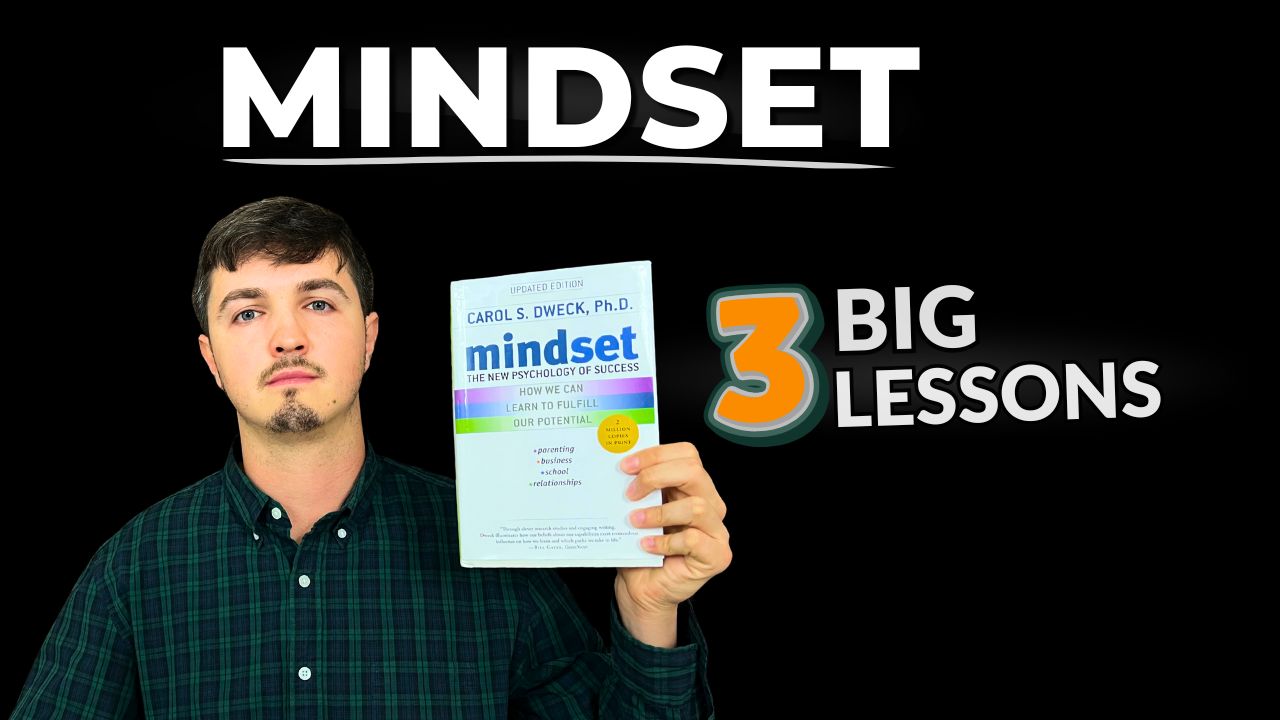
Carol Dweck’s Mindset: The New Psychology of Success explains that your beliefs can greatly influence how successful you become.
Dweck reveals a simple but life-changing idea: your mindset shapes your ability to grow, learn, and achieve your goals.
People tend to adopt one of two core beliefs about intelligence and talent: a fixed mindset or a growth mindset.
A fixed mindset believes that intelligence, talent, and abilities are set in stone. People with this mindset often avoid challenges, fear failure, and give up easily when things get difficult.
A growth mindset, on the other hand, sees ability as something that can be developed through effort, practice, and feedback. That one shift in perspective can change how you handle failure, learning, and success itself.
Dweck’s research shows that your mindset can impact how you study, lead, parent, and even love. When you see challenges as opportunities to learn instead of proof of limitation, growth becomes inevitable.
Fixed vs. Growth Mindset at a Glance
At its core, Dweck’s theory comes down to how we view ability and potential. Here’s a simple way to see the difference:
Fixed Mindset
Believes talent and intelligence are static.
Avoids challenges to protect ego.
Fears failure and often gives up early.
Sees effort as a sign of weakness.
Growth Mindset
Believes ability can be improved through effort and learning.
Embraces challenges as opportunities to grow.
Learns from feedback and keeps going after setbacks.
Sees effort as the path to mastery.
The key takeaway: your mindset isn’t a label, it’s a choice you make daily through your actions and reactions.
Lesson 1: Your Mindset Is a Choice
Every challenge you face is an opportunity to choose which mindset to operate from. When something feels difficult, you can either shut down or stay open and curious.
A fixed mindset says, “I can’t do this.” A growth mindset says, “I can’t do this yet.”
That single word—yet—keeps the door to growth open.
Try This
When you feel frustrated, pause and reframe the thought: “This is tough, but it’s teaching me something.”
Treat mistakes as data. Each one shows you what to improve next.
Replace self-judgment with curiosity. Instead of “Why am I bad at this?” ask “What can I learn here?”
Your mindset isn’t something you’re born with. It’s a pattern you can practice until it becomes automatic.
Lesson 2: Effort Is What Unlocks Talent
Talent gets you started, but effort keeps you growing. Dweck’s research shows that people who value learning over looking smart end up improving faster, and enjoying the process more.
When you see effort as a weakness, you stop yourself from growing. When you see it as a sign of progress, everything changes.
Reframe the Story
“This is hard.” → “This is hard, which means I’m learning.”
“I failed.” → “I learned what doesn’t work.”
“I’m not good at this.” → “I’m getting better every time I try.”
In Action
At work: Take on a task you’ve been avoiding. Use it as a learning experience.
In school or learning: Focus on consistency, not perfection.
In life: Remember that every expert was once a beginner who refused to quit.
💬 Effort isn’t the opposite of talent—it’s what transforms it into success.
Lesson 3: Praise the Process, Not the Person
How we give and receive praise shapes our mindset more than we realize. When we praise people for being “smart” or “naturally talented,” we encourage a fear of failure. But when we praise effort, strategy, and persistence, we fuel growth.
Example
A teacher tells one student, “You’re so smart,” and another, “You worked really hard on this.” When both students later face a tough problem, the first one avoids it to protect their image. The second one keeps trying because they’ve learned that effort leads to improvement.
Try This
Say, “I’m proud of how hard you worked,” instead of “You’re so talented.”
Compliment your own persistence, not just outcomes.
Focus on progress, not perfection.
When you value effort over image, failure becomes feedback, and that’s where real growth happens.
How Mindset Shapes Real-World Success
A growth mindset doesn’t just make you feel better, it changes your results. People who practice it tend to:
Take more risks and learn faster.
Recover from setbacks more easily.
Stay motivated longer, even when progress is slow.
In sports, business, and relationships, the same principle applies: growth happens when you focus on getting better instead of looking perfect.
“Becoming is better than being.” — Carol Dweck
Is Mindset by Carol Dweck Worth Reading?
Yes, absolutely. It’s one of those rare books that take a simple idea and reveal how deeply it applies to every part of life.
If you’ve ever struggled with self-doubt, perfectionism, or fear of failure, Mindset by Carol Dweck can help you reframe those struggles into learning opportunities. It’s practical, encouraging, and rooted in decades of research.
5 Simple Ways to Build a Growth Mindset Today
Catch your fixed-mindset voice. When it says “I can’t,” answer with “I can learn.”
Choose one small challenge each week. Growth comes from trying, not waiting for confidence.
Ask for feedback regularly. See it as guidance, not criticism.
Measure effort, not just results. Track how often you show up and practice.
Celebrate progress. Reward persistence and patience, not perfection.
These small habits train your brain to default to growth, no matter the situation.
Common Questions About Mindset
What are the two types of mindset?
Carol Dweck’s research identifies two main mindsets: fixed and growth. A fixed mindset assumes ability is static. A growth mindset believes it can be developed through effort and learning.
How does mindset affect success?
Your mindset shapes how you respond to challenges. People with a growth mindset stay motivated longer because they see obstacles as opportunities instead of threats.
What is Dweck’s main lesson about success?
Success isn’t about proving how talented you are, it’s about improving who you are. Growth-minded people stay curious, consistent, and committed to life long learning.
Is a growth mindset always easy to maintain?
Not always. Even growth-minded people slip into fixed patterns sometimes. The key is noticing it quickly and reframing your thoughts before giving up.
Is Mindset worth reading if I’ve already heard the main idea?
Definitely. The concept may sound simple, but Dweck’s examples (especially in parenting, business, and sports) show how to actually live it out.
Final Takeaway
Your mindset is the lens through which you see your potential. A fixed mindset says, “I can’t.” A growth mindset says, “I can learn.”
That difference shapes how you think, work, and grow.
The next time you face a challenge, don’t ask, “Am I good enough?” Ask, “What can I learn from this?”
Unfortunately, financial literacy wasn’t something I learned from my parents. They grew up in a poor, war-torn part of Eastern Europe. After we immigrated to America, the money advice they lived by was simple. Work hard and save what little you can. That mindset left me struggling in college. I was juggling jobs and falling behind on bills. I constantly felt like money was always a source of stress.
That all changed when I read Ramit Sethi’s bestselling book, I Will Teach You To Be Rich. His no-BS, science-backed, actionable approach to money will completely rewire your thinking. For the first time, I realized that building wealth wasn’t just for “other people.” It was a skill I can learn — and master.
In this article, you’ll get a chapter-by-chapter summary and key lesson from each chapter. At the end you’ll find my Top 5 Actionable Takeaways from the book.
Chapter-by-Chapter Summary of I Will Teach You To Be Rich
📖 Chapter 1: Optimize Your Credit Cards
Learn to make credit cards work for you — not against you. Ramit teaches how to pick the best cards, pay off debt systematically, and even negotiate fees and APR’s down.
Key lesson: Master your credit to build wealth, not drain it. Negotiate everything.
📖 Chapter 2: Beat the Banks
Stop letting big banks nickel and dime you. Open high-yield savings and no-fee checking accounts to avoid unnecessary fees and grow your savings faster.
Key lesson: Every dollar you keep is a dollar that can grow. Switch banks if you need to.
📖 Chapter 3: Get Ready to Invest
Before investing, set up your foundation: build an emergency fund, automate your finances, and learn the basics of retirement accounts.
Key lesson: Preparation is power. You can’t invest confidently without a solid foundation.
📖 Chapter 4: Conscious Spending
Spend on what you love — guilt-free — and cut ruthlessly on things that don’t matter. This is the heart of living your own version of a “rich life.”
Key lesson: Money should help you live, not feel trapped. Define your values and spend accordingly.
📖 Chapter 5: Save While Sleeping
Automate your finances so saving and investing happen on autopilot. This is the ultimate set-it-and-forget-it system.
Key lesson: Systems beat willpower. Automate your way to wealth.
📖 Chapter 6: The Myth of Financial Expertise
Most “experts” over complicate investing to sell you something. The truth? Simple index funds outperform most professionals over time.
Key lesson: Stop chasing hot tips. Focus on what works and stick to it.
📖 Chapter 7: Investing Isn’t Only for Rich People
You don’t need a lot to start investing — just consistency and time. Start small, automate, and let compounding do the heavy lifting.
Key lesson: The earlier you start, the richer you’ll end up. Time is your biggest asset.
📖 Chapter 8: How to Maintain and Grow Your System
Once you’ve set up your system, it needs maintenance and regular check-ins — but not constant worry.
Key lesson: Review and adjust, but don’t obsess. Focus on the big picture.
📖 Chapter 9: A Rich Life
Wealth isn’t just about money. It’s about designing your life intentionally — spending on what truly matters, giving generously, and enjoying the journey.
Key lesson: Define what your “rich life” looks like — and work toward it one step at a time.
My Top 5 Actionable Takeaways
Big Wins > Penny Pinching Focus on things that really move the needle. Focus on negotiating rent, automating savings, and investing. These actions are more effective than skipping $4 coffees.
Start Now, Even if You Feel Behind Waiting costs more than starting small today. Compound interest works in your favor the earlier you start.
Spend on What Brings You Joy, Guilt-Free Stop feeling bad about spending on things you love. Make sure you’re cutting back on what you don’t value.
Automate Everything Remove decision fatigue. Set up your checking, savings, and investments to run automatically so you don’t have to think about it.
Your Mindset is the Real Key Being “bad with money” is just a story you’ve been telling yourself. You can rewrite it starting today.
Build Your Rich Life
If you’ve read this far, you’ve already proven that you’re serious about improving your finances. And that’s the first — and most important — step.
As Ramit Sethi teaches, building a rich life is about progress, not perfection. Start with one step from this summary and take action this week.
For decades, affirmations have been seen as feel-good phrases or self-help mantras. But behind the repetition of “I am enough” or “I am strong” lies something deeper—something that neuroscience is just beginning to unpack.
So why are affirmations powerful? The answer lies in your brain’s ability to rewire itself, the psychology of identity, and how language influences the subconscious mind. In this article, you will learn the science behind affirmations and why they actually work.
What Are Affirmations, Really?
Affirmations are short, positive statements meant to strengthen a belief or mindset. But the most powerful affirmations aren’t vague or feel-good fluff—they’re grounded in psychology and behavior change.
According to experts like Dr. Carol Dweck, author of the book Mindset: The New Psychology of Success, and Dr. Andrew Huberman, a neuroscientist at Stanford, affirmations that focus on effort, identity, and resilience create the deepest and most lasting impact.
These are known as identity-based affirmations—and they work because they help rewire your brain over time. Instead of telling yourself something your subconscious may not believe, you affirm the kind of person you’re becoming.
For example, instead of saying: “I am successful,” you could say:
“I grow through challenges and build success step by step.”
“I’m the kind of person who creates success through consistent action.”
“I embody the habits and mindset of someone who achieves their goals.”
Why does that matter? Because it doesn’t just tell your brain what you want. It tells your brain who you’re becoming. And that’s where real change happens.
The Neuroscience of Affirmations
When you say an identity-based affirmation with intention, you activate:
The prefrontal cortex: This part of your brain handles planning, discipline, and focus. Affirmations that reinforce effort (e.g., “I keep going even when it’s hard”) light up this region.
The reward system (ventral striatum): Repeating self-affirming statements can trigger dopamine, your brain’s motivation molecule.
The default mode network: This is your brain’s internal narrative system—the part that quietly tells you who you are. When you feed it new, empowering beliefs, it begins to reshape how you see yourself.
Generic affirmations like “I am successful” can create cognitive dissonance if your subconscious doesn’t believe them. But affirmations rooted in identity and behavior, such as:
“I am the kind of person who stays calm under pressure”
…are more believable. Your brain can integrate them because they reflect a pattern of who you’re becoming—not just what you wish for. It’s not just what you say—it’s who you tell your brain you’re becoming. That’s where the real change happens.
That’s why effort-based praise is so effective (Dweck, 2006). It reinforces behaviors that lead to real change.
The Best Time to Use Affirmations
Your brain is most impressionable during:
Early morning (alpha brainwave state)
Right before bed (theta brainwave state)
After deep breathing or meditation
In these moments, the subconscious mind is more open to new programming.
Say your affirmation out loud. Repeat it slowly. Visualize what it means. This activates not only the language centers of the brain, but the sensorimotor system, making it feel more real.
How Affirmations Build Resilience
When practiced consistently, affirmations help:
Reduce stress by calming the amygdala (your fear center)
Build mental toughness by reinforcing identity
Strengthen habit loops by pairing words with action
Over time, this creates new neural pathways—the foundation of neuroplasticity.
The result? You don’t just think differently. You become different.
Try This: One Powerful Affirmation
Instead of a list, try going deep on one phrase. Here’s one backed by neuroscience, psychology, and experience:
“I am the kind of person who turns challenges into training for my future self.”
This single sentence carries identity, grit, and growth.
Say it in the mirror. Say it in your mind. Say it until it becomes part of how you face challenges.
Want to Go Deeper?
Discover the most powerful science-backed affirmation that rewires your brain.
According to neuroscience and psychology research, the most powerful affirmation is one that rewires your mindset by focusing on effort and identity—not just outcome. In this video below, you’ll discover what it is and why it works.
Affirmations are powerful not because they magically manifest success, but because they train your brain to believe new truths. They reinforce effort, reshape identity, and activate the systems responsible for resilience and motivation.
Start with one. Repeat it often. And let your words build the mindset you need.
Looking for powerful growth mindset quotes to inspire change, overcome self-doubt, and fuel resilience? In this article you will discover the best growth mindset quotes to help you unlock your full potential.
Let’s look at over 25 inspiring growth mindset quotes and how to use them in your daily life. If you prefer visual learning, feel free to watch the video below from my YouTube channel:
What is a Growth Mindset?
Before diving into the quotes, it helps to understand what a “Growth Mindset” is.
A growth mindset—a concept developed by Dr. Carol Dweck—is the belief that your intelligence, skills, and abilities can be improved through effort and learning. In contrast, a fixed mindset believes you’re either “born with it” or not.
25 Growth Mindset Quotes to Transform How You Think
Your mindset shapes your life—and the right words can change everything.
To make it easier to find the quotes that speak to your journey, I organized them into categories. These categories are based on what you’re facing or striving for. They include failure, learning, persistence, mindset shifts, and growth for kids and students.
Let these words guide you, fuel your belief, and rewire how you think.
Growth Mindset Quotes About Failure
“I have not failed. I’ve just found 10,000 ways that won’t work.” – Thomas Edison
“Success is stumbling from failure to failure with no loss of enthusiasm.” – Winston Churchill
“Mistakes are proof that you are trying.” – Jennifer Lim
“Only those who dare to fail greatly can ever achieve greatly.” – Robert F. Kennedy
“Failure is a bruise, not a tattoo.” – Jon Sinclair
Quotes About Learning & Growth
“In a growth mindset, challenges are exciting rather than threatening.” – Carol Dweck
“The expert in anything was once a beginner.” – Helen Hayes
“Becoming is better than being.” – Carol Dweck
“Live as if you were to die tomorrow. Learn as if you were to live forever.” – Mahatma Gandhi
“Growth is never by mere chance; it is the result of forces working together.” – James Cash Penney
Quotes on Effort and Persistence
“Hard work beats talent when talent doesn’t work hard.” – Tim Notke
“You miss 100% of the shots you don’t take.” – Wayne Gretzky
“Success is the sum of small efforts repeated day in and day out.” – Robert Collier
“Discipline is choosing between what you want now and what you want most.” – Abraham Lincoln
“Do not judge me by my success, judge me by how many times I fell down and got back up again.” – Nelson Mandela
Mindset Shift Quotes
“Whether you think you can or you think you can’t, you’re right.” – Henry Ford
“The mind is everything. What you think, you become.” – Buddha
“It’s not that I’m so smart. It’s just that I stay with problems longer.” – Albert Einstein
“Change your thoughts and you change your world.” – Norman Vincent Peale
“Success comes from knowing that you did your best to become the best that you are capable of becoming.” – John Wooden
Growth Mindset Quotes for Kids & Students
Looking for quotes to share with your children or students? These are perfect!
“You can learn anything.” – Khan Academy
“It’s not ‘I’m not good at this’, it’s ‘I’m not good at this yet.’” – Unknown
“Every mistake you make is progress.” – Unknown
“Practice makes progress, not perfection.” – Unknown
“Don’t be afraid to fail. Be afraid not to try.” – Michael Jordan
Want to know how your brain affects your mindset? 🧠 Discover the science behind mindset development in this in-depth blog post: How Does the Brain Play Into Mindset?
🎥 Watch next if you prefer visual learning: Uncover the 5 daily habits that will help you live the growth mindset philosophy in your own life. Combine them with your favorite quotes to create a powerful mindset routine.
Have you seen your child get upset after not getting what they want? Or heard them say, “I’m just bad at math,” and stop trying?
As parents, you want your kids to be confident, strong, and willing to learn. The good news is that you can help them face challenges gracefully with a growth mindset.
In this article, you’ll learn how to help your child face challenges with confidence. This is key to unlocking your kid’s full potential. We’ll explore the importance of a growth mindset for kids and how you can teach it.
This isn’t about telling your child they’re “smart.” It’s about teaching them that their brain is like a muscle—it gets stronger with effort and practice.
🎥 Watch with your child: This short video helps kids understand what a growth mindset really means. It also shows them how to start using it every day. Teachers and parents can use it as a fun intro before diving into the tips below.
What is a Mindset?
A mindset is simply the way you think about your own abilities and potential. It’s the lens through which you view challenges, mistakes, and learning.
What is the difference between a growth mindset and a fixed mindset child?
A fixed mindset believes abilities are static. You’re either good at something, or you’re not. A growth mindset understands that abilities can be developed through dedication and hard work.
Here’s a quick comparison:
Fixed Mindset
Growth Mindset
“I’m such a slow reader.”
“The more I read, the better I get at reading.”
“I’m bad at math.”
“I’m not great at math yet, but I will learn!”
“Mistakes mean I failed.”
“Mistakes are a chance for me to learn and grow.”
“I’ll give up if it’s too hard.”
“This is tough, but I’ll keep trying until I get it.”
Teaching kids the difference between a fixed and growth mindset is crucial for empowerment.
When children realize they can improve their abilities and intelligence through effort and dedication, they become more resilient. They develop a love for learning. They are also more willing to face challenges.
This understanding creates a positive attitude towards education and gives them tools to overcome obstacles. They learn to see failure as a part of learning. This perspective ultimately boosts their self-confidence in both personal and academic areas.
Seeing Mindsets in Action: The Bike-Riding Test
Imagine two kids trying to ride a bike for the first time:
The Fixed Mindset Child: After one fall, they might say, “I’m terrible at this. I’ll never learn.” They give up right away, believing they lack the natural talent.
The Growth Mindset Child: After a fall, they might say, “This is tough, but I’ll get it with practice!” They brush themselves off and keep trying until they master it.
A fixed mindset leads to frustration. It often results in giving up. In contrast, a growth mindset sees every challenge as an opportunity for progress.
4 Powerful Strategies to Teach Your Child a Growth Mindset
Ready to start? Here’s how you can empower your child today and foster growth mindset kids:
1. Embrace the Power of “Yet“
This is one of the most effective ways to teach a growth mindset for kids. Teach your child to add the word “yet” to the end of a negative thought.
Instead of: “I can’t do this!”
Try: “I can’t do this… yet!“
This simple word shift instantly transforms a feeling of failure into a feeling of possibility.
2. Praise the Effort, Not Just the Result
Instead of saying, “You’re so smart!” after they get a good grade, try praising the effort they put in.
Say: “You worked so hard to study for that test, and it paid off!”
This teaches them that hard work is the key to success, not innate talent. When you focus on effort, you are actively building a growth mindset for kids.
3. Celebrate Mistakes as Learning Opportunities
When your child makes a mistake, avoid frustration. Instead, ask them:
“What did you learn from that?”
“How could we do that differently next time?”
This turns mistakes from a source of shame into a valuable part of the learning process.
4. Model a Growth Mindset Yourself
Be a living example for your child. Talk openly about your own struggles and how you overcame them.
Say: “I’m having a hard time with this recipe, but I’m going to watch a video to figure it out.”
Ask for help when you need it. This shows your child that learning is a lifelong journey.
Daily Growth Mindset Challenge
A simple, powerful way to reinforce these lessons is to end each day with this question:
“What was one thing you learned or struggled with today, and what did you do to overcome it?”
This daily reflection will help your child see their progress and build their resilience over time.
To put these ideas into practice, you can also use resources like this video of growth mindset affirmations to help reinforce these powerful concepts with your kids:
A growth mindset is the greatest gift you can give your child. It’s the key to helping them become confident, resilient, and ready to take on any challenge.
Now It’s Your Turn!
What’s one thing you’ll do to start developing growth mindset kids? Let me know in the comments.
The meaning of growth mindset is the belief that abilities, talent, and can improve through effort, learning, and persistence. Originally established by psychologist Dr. Carol Dweck, this mindset leads to higher achievement, greater resilience, and lifelong personal growth.
What is the growth mindset?
A growth mindset is the belief that your intelligence, talents, and abilities are not fixed. They can be developed through effort, strategy, and learning from feedback.
In contrast, a fixed mindset believes you’re either “good at something” or not. It argues that no amount of effort will change that.
This idea, founded by Carol Dweck, transformed the way we think about learning and achievement.
“In a growth mindset, challenges are opportunities, not threats. Your brain is a muscle. The more you use it, the stronger it gets.” – Dr. Carol Dweck
Key Characteristics of a Growth Mindset
Belief in Development You can improve with practice and learning.
Embracing Challenges Struggle isn’t failure, it’s how you grow.
Persistence in Setbacks Mistakes are feedback, not proof you “can’t.”
Effort as a Path to Mastery Success comes from hard work, not just talent.
Learning from Feedback Criticism helps you grow, it’s not personal.
Inspired by Others You admire success and use it as fuel.
Growth Mindset vs. Fixed Mindset: Key Differences
Let’s break this down:
Growth Mindset
Fixed Mindset
Believes abilities can improve
Thinks abilities are fixed
Embraces challenges
Avoids challenges
Views effort as a path to mastery
Sees effort as pointless
Learns from criticism
Ignores feedback
Inspired by others’ success
Feels threatened by others’ success
Imagine being stuck in traffic and deciding to take a new route instead of waiting. A growth mindset is like taking that new route—it might not work perfectly, but it teaches you something new.
The Origin of the Growth Mindset
The growth mindset concept was born from groundbreaking research by Dr. Carol Dweck at Stanford University. In one famous study, children were given puzzles that got harder over time.
Some thrived—excited by the challenge.
Others gave up quickly when it got tough.
Her findings are detailed in her influential book, Mindset: The New Psychology of Success.
The kids who lit up with excitement were eager to tackle harder problems. Others grew frustrated and gave up as soon as they struggled.
Why the difference?
Mindset.
Those with a growth mindset kept going. They believed they could figure it out. Those with a fixed mindset thought struggle meant they weren’t “smart enough.”
This discovery revolutionized education, psychology, parenting, and business.
Why is a Growth Mindset Important?
People with a growth mindset tend to:
👉 Perform better academically and professionally 👉 Bounce back faster from setbacks 👉 Build stronger relationships 👉 Have greater motivation and resilience
A 2015 study in Psychological Science showed students who were taught growth mindset principles significantly improved their grades.
One personal example on the importance of becoming growth oriented: I used to struggle with public speaking. My fixed mindset told me I wasn’t a “natural,” so why try? But after adopting a growth mindset, I started practicing, watching TED Talks, and seeking feedback. Over time, my skills improved, and what once terrified me became a strength.
A 2019 study published in Nature also found that students with a growth mindset were more likely to persist. They were significantly better at dealing with difficult tasks. This is proof that this mindset applies to both learning and life.
How to Develop a Growth Mindset
Here are 3 practical steps to develop a growth mindset:
Challenge Negative Thoughts Replace “I can’t do this” with “I can’t do this yet.”
Celebrate Effort Over Outcome Focus on the process, not perfection.
Learn from Mistakes Every mistake contains at lesson lesson, if you choose to look for it.
Daily Habits to Reinforce a Growth Mindset
Practice Gratitude: Think about what you’re thankful for and what you’ve learned each day.
Set Mini-Goals: Break big challenges into small, manageable steps.
Seek Feedback: Constructive criticism is a growth mindset goldmine.
Mindfulness and Growth Mindset
Practicing mindfulness boosts neuroplasticity, which is your brain’s ability to form new connections.
That means you can literally rewire your brain to adopt a growth mindset through habits like:
Meditation
Journaling
Deep reflection
Growth mindset isn’t just mental, it’s biological.
Examples of People with a Growth Mindset
Here are a few well known people with a Growth Mindset:
Serena Williams: Used every loss to improve and stayed at the top for decades.
Elon Musk: Tackles massive challenges with relentless curiosity and learning.
Oprah Winfrey: Overcame rejection and trauma to build a media empire.
Michael Jordan: Was cut from his high school team—then became the GOAT.
Steven Spielberg: Rejected from film school multiple times.
Common Misconceptions About Growth Mindset
“It means I can be anything if I try hard enough.” ➤ Not quite. Effort matters, but so does strategy and mentorship.
“It’s all positive thinking.” ➤ Wrong. Growth mindset is backed by science, not just motivation.
“Some people are born with it.” ➤ False. Mindset can shift, gradually, like a dimmer switch (Mary C. Murphy).
🧠 Bonus: People Also Ask – FAQ
What is the best definition of growth mindset?
It’s the belief that you can grow your abilities through effort, feedback, and learning—not natural talent alone.
How do you teach a growth mindset?
By modeling it: praise effort, reframe failure, and emphasize learning over perfection.
Can adults develop a growth mindset?
Yes. Neuroplasticity means we can rewire our thinking at any age.
The Meaning of Growth Mindset
A growth mindset isn’t just a theory, it’s a powerful way to change how you live, learn, and lead.
It means seeing yourself as a work in progress.
Your next level isn’t fixed, it’s earned.
So here’s your challenge: What’s one area in your life where you want to grow? Leave a comment or share your story, I’d love to hear how you’re building your mindset.